

The notice from the IRS says you owe $612 in penalties on a tax bill you already paid. You filed three weeks late last spring because your father was in the hospital and the deadline slipped your mind. You’ve always filed on time before. The penalty feels unfair, and it’s real money. A short IRS penalty abatement letter can often get it removed.
The IRS does remove penalties, more often than people think. If you have a clean history, you may qualify for first-time abatement without having to explain anything. If not, you may still qualify for reasonable cause relief. Here’s how to ask, with three letter templates.
Quick note: This guide is general information, not tax or legal advice. IRS rules change, and complex cases are worth discussing with a tax professional.
Penalties That Can Be Removed
Penalty relief most often applies to:
- failure to file on time
- failure to pay on time
- failure to deposit (for business payroll taxes)
Interest generally can’t be waived, though if a penalty is removed, the interest charged on that penalty usually comes off too.
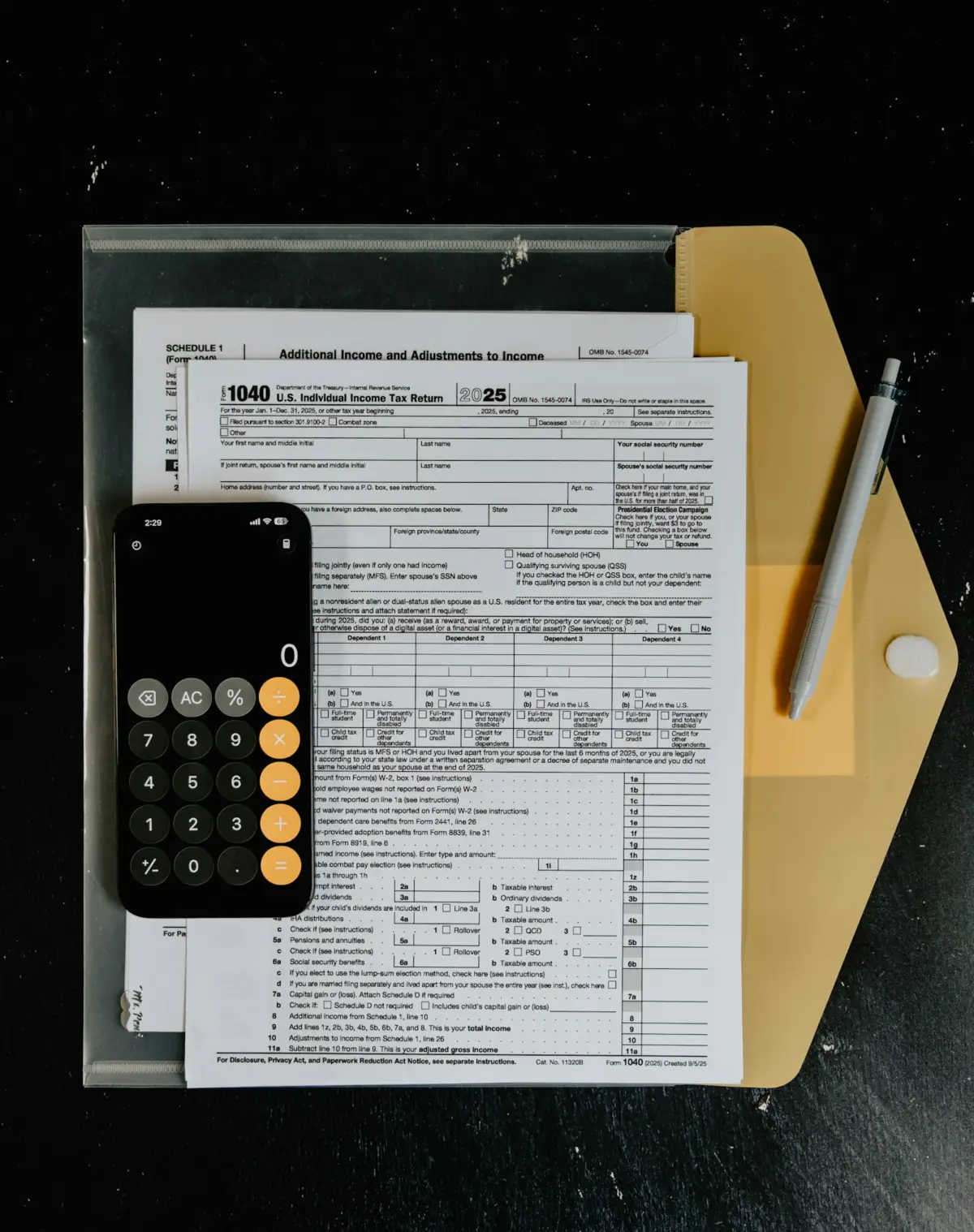
Option 1: First-Time Abatement
This is an administrative waiver. You don’t have to explain why you were late. You generally qualify if:
- you had no penalties in the three tax years before the year in question (or any were removed for reasons other than first-time abatement)
- you’ve filed all currently required returns or valid extensions
- you’ve paid, or arranged to pay, the tax owed (an installment agreement counts if you’re current on it)
Many people can get first-time abatement just by calling the number on the notice. A letter works too.
Option 2: Reasonable Cause
If you don’t qualify for first-time abatement, you can ask for relief based on reasonable cause, meaning you used ordinary care but couldn’t comply because of circumstances beyond your control. Examples the IRS considers include:
- serious illness, death, or unavoidable absence (yours or an immediate family member’s)
- fire, natural disaster, or other disturbance
- inability to get the records you needed
- relying on incorrect written advice from the IRS
Lack of money or forgetting usually isn’t enough by itself. You’ll need to show what happened, when, and how quickly you fixed things once the situation improved.
A Worked Example
Paul filed his return 22 days late, owed $3,100, and paid in full when he filed. The IRS charged a $612 failure-to-file penalty. He has filed on time for the past ten years with no penalties.
He calls the number on his notice and requests first-time abatement. The agent approves it on the phone. If the call had been denied, he could have sent Template 1, or Template 2 with records of his father’s hospital stay.
Template 1: First-Time Abatement Request
[Your Full Name]
[Address]
SSN or ITIN: [last 4 only in letter; full number on any IRS form][Date]
Internal Revenue Service
[Address shown on your notice]Re: Request for first-time penalty abatement, Notice [CP number], Tax year [year]
Dear Sir or Madam,
I received the enclosed notice dated [date] assessing a [failure-to-file / failure-to-pay] penalty of $[amount] for tax year [year].
I request that this penalty be removed under the IRS First-Time Abatement policy. I qualify because:
- I had no penalties for the three tax years before [year].
- I have filed all currently required returns.
- I have [paid the tax due in full on (date) / set up an installment agreement and am current on payments].
Please remove the penalty and any interest charged on it.
Sincerely,
[Name]
[Phone]
Enclosure: copy of notice
Template 2: Reasonable Cause (Illness or Family Emergency)
Re: Request for penalty abatement for reasonable cause, Notice [CP number], Tax year [year]
Dear Sir or Madam,
I request removal of the [failure-to-file / failure-to-pay] penalty of $[amount] for tax year [year] based on reasonable cause.
From [date] to [date], [I was hospitalized / my father was hospitalized and I was his primary caregiver]. During this time I was unable to [prepare and file my return / manage my finances]. Documentation is enclosed.
As soon as the situation improved, I [filed my return on (date) / paid the balance on (date)]. I have a history of filing and paying on time.
I exercised ordinary care and prudence, but circumstances beyond my control prevented me from complying. Please remove this penalty.
Sincerely,
[Name]
Enclosures: [list]
Template 3: Reasonable Cause (Disaster or Lost Records)
Re: Request for penalty abatement for reasonable cause, Notice [CP number], Tax year [year]
Dear Sir or Madam,
On [date], [a fire / flood / storm] at my home [destroyed my financial records / forced me to evacuate]. [Insurance claim / news report / FEMA notice] is enclosed.
I was unable to obtain the records needed to file accurately until [date]. I filed my return on [date], within [X] days of getting the records.
I request removal of the penalty of $[amount] based on reasonable cause.
Sincerely,
[Name]
How to Submit Your IRS Penalty Abatement Letter
- Call first for first-time abatement. It’s often the fastest route.
- Mail a letter to the address on your notice, or use Form 843 (Claim for Refund and Request for Abatement).
- If you already paid the penalty, you can still ask for it back.
- Keep copies of everything and send your IRS penalty abatement letter by certified mail.
Frequently Asked Questions
Can I use first-time abatement more than once?
Generally, it’s available once in any three-year period, since you need a clean three-year history to qualify.
What if the IRS says no?
You can appeal through the IRS Independent Office of Appeals. The denial letter explains how.
Does this work for state tax penalties?
Many states have their own penalty relief programs, with different rules. Check your state tax agency.
Related Guides
Official Resources
Last reviewed: November 5, 2026 by the PerfectWordNow Editorial Team.
Disclaimer: This article is for general information only and is not tax or legal advice. For complex situations, consult a CPA, enrolled agent, or tax attorney.