
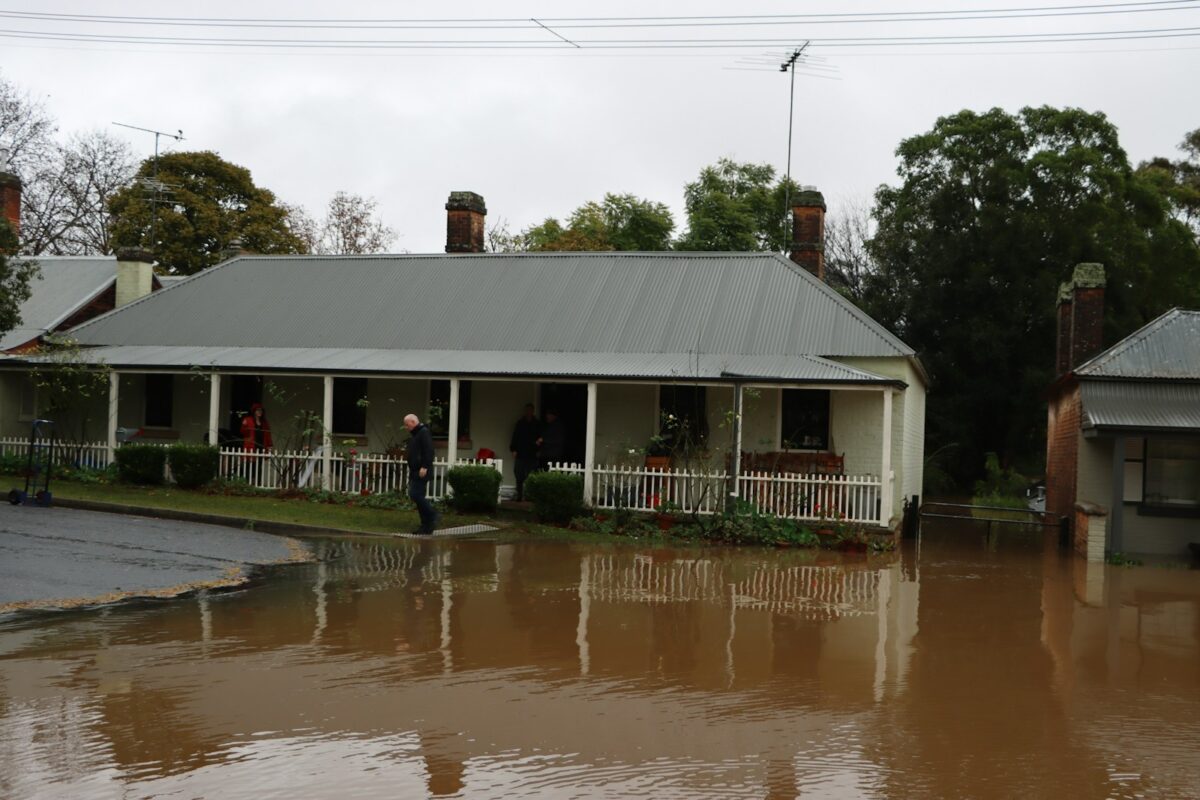
You come downstairs on a Sunday morning and your socks are wet before you reach the kitchen. A supply line under the sink burst overnight. The floor is buckling, the bottom of the cabinets is swollen, and there’s a dark stain spreading on the ceiling of the basement below.
First, shut off the water and take pictures. Then call your insurer to report the claim. After that, a clear homeowners insurance claim letter puts the details in writing, so nothing gets lost between phone calls and adjusters. Here’s what to do, and three templates for the most common situations.
Quick note: This guide is general information, not legal advice. What’s covered depends on your specific policy, and claim rules vary by state.
The First 48 Hours
- Stop the damage. Shut off water, cover a broken window, put a tarp on the roof if it’s safe. Most policies require you to take reasonable steps to prevent further damage, and the cost of those steps is often covered.
- Document everything before you clean up. Photos and video of every room, close-ups and wide shots.
- Keep damaged items if you can, or at least photograph them, until the adjuster has seen them.
- Report the claim promptly. Policies usually require “prompt notice.” Waiting can give the insurer a reason to question the claim.
- Save receipts for emergency repairs, fans, hotel stays, and meals if you can’t live in the home.

Know What’s Usually Covered
Standard homeowners policies typically cover sudden and accidental water damage, like a burst pipe or a washing machine hose that fails. They usually don’t cover:
- flooding from outside (that needs separate flood insurance)
- slow leaks that happened over months
- damage from lack of maintenance
- sewer backups, unless you added that coverage
Wind and hail damage are usually covered, though some policies in coastal areas have a separate, higher windstorm deductible.
A Worked Example
After the burst pipe, Kevin calls his insurer on Sunday and gets a claim number. On Monday he sends a homeowners insurance claim letter (Template 1) by email to the claims address, attaching 40 photos, a plumber’s invoice showing the failed supply line, and receipts for fan rentals.
The adjuster’s estimate comes in at $6,200. Kevin’s contractor quotes $11,400, mostly because the adjuster only included replacing flooring in the kitchen, not the connected hallway, where the same flooring runs continuously. Kevin sends Template 3 with the contractor’s estimate and photos of the continuous floor. After a second inspection, the insurer revises the estimate to $10,300.
Template 1: Initial Homeowners Insurance Claim Letter
[Your Full Name]
[Property Address]
[Phone] | [Email][Date]
[Insurance Company Name]
Attn: Claims Department
[Address or email]Re: Property damage claim, Policy # [number], Claim # [number, if assigned]
Dear Claims Department,
I am writing to confirm the claim I reported by phone on [date]. On [date of loss], [describe what happened, e.g., a water supply line under the kitchen sink burst, flooding the kitchen and leaking into the basement].
Damage includes:
- [Kitchen flooring and lower cabinets]
- [Basement ceiling drywall and insulation]
- [Personal property: list major items]
I took immediate steps to prevent further damage, including [shutting off the water, hiring a plumber, renting fans]. Receipts are enclosed.
Also enclosed are photos and video of the damage. Please let me know when an adjuster can inspect the property and what else you need from me.
Sincerely,
[Name]
Enclosures: [list]
Template 2: Storm Damage Claim
Re: Storm damage claim, Policy # [number]
Dear Claims Department,
On [date], a [windstorm / hailstorm] in [city] damaged my home at [address]. [Describe damage: missing shingles, a fallen tree on the garage roof, broken windows, interior water damage from the roof.]
I placed a tarp on the roof on [date] to prevent further leaks. Photos taken before and after the temporary repair are enclosed, along with [a roofer’s inspection report / local weather reports for that date].
Please schedule an inspection and confirm my claim number in writing.
Sincerely,
[Name]
Template 3: Disputing a Low Estimate
Re: Dispute of estimate, Claim # [number]
Dear [Adjuster Name],
Thank you for your estimate dated [date] of $[amount]. I believe it does not cover the full cost of repairs for these reasons:
- [The estimate replaces kitchen flooring only, but the same flooring runs continuously into the hallway, and matching material is no longer available.]
- [The estimate does not include removing and replacing the damaged lower cabinets.]
- [Labor rates are below current local rates.]
Enclosed is a written estimate of $[amount] from [licensed contractor]. Please review it and either revise your estimate or explain in writing which items you disagree with and why. I would also welcome a re-inspection.
Sincerely,
[Name]
Tips for a Smoother Claim
- Put everything in writing. After every phone call, send a short email summarizing what was said.
- Read your policy’s “duties after loss” section. It lists what you must do, including any proof of loss deadline.
- Get your own estimate from a licensed contractor.
- Don’t throw away damaged items until the adjuster says it’s okay.
- Ask about additional living expenses if you can’t stay in the home.
Frequently Asked Questions
What if my claim is denied?
Ask for the denial in writing, with the specific policy language. You can appeal internally, use the appraisal clause if your policy has one, or file a complaint with your state insurance department.
Will filing a claim raise my premium?
It can. Weigh the repair cost against your deductible before filing for small losses.
Can I hire a public adjuster?
Yes. Public adjusters work for you, not the insurer, and usually take a percentage of the payout. They’re most useful for large or complicated claims.
Related Guides
Official Resources
- National Association of Insurance Commissioners (NAIC)
- FloodSmart.gov: National Flood Insurance Program
Last reviewed: November 5, 2026 by the PerfectWordNow Editorial Team.
Disclaimer: This article is for general information only and is not legal advice. Your policy terms control what is covered.