
The crown cost $1,350. Your dentist’s office said your plan would cover about half. Then the explanation of benefits showed up with a $0 in the “plan pays” column and a short code you’ve never seen, and the office manager is now asking how you’d like to pay the balance.
Before you pull out your card, check whether an appeal is worth filing. A clear dental insurance appeal letter that answers the actual reason for the denial can be enough to get a claim paid, especially when the problem was missing paperwork or a miscoded procedure. It costs nothing to send except your time.
This guide covers how to read the denial, what to attach, four templates for common situations, the deadlines to watch, and your options if the appeal fails.
Quick note: This guide is general information, not legal, insurance or dental advice. Dental plans vary a lot. Your plan documents and denial letter control your deadlines and your options.
Start by Reading the Denial
Your appeal needs to answer the insurer’s stated reason, so find it first. Look at your explanation of benefits (EOB) or denial letter for a reason code and a short explanation, then look up the code in the key on the back or at the end. If the wording is vague, call member services and ask two questions: “What exactly caused this denial?” and “Can it be fixed by sending corrected information, without a formal appeal?”
That second question can save you weeks. If it was just a coding error or a missing X-ray, your dentist’s office may be able to resubmit the claim directly.
Why Dental Claims Get Denied, and What to Do About Each
Many denials come down to a handful of reasons. Dental trade publication DrBicuspid lists several familiar ones, including incomplete information, coding errors and clinical limits written into the contract. Here’s how to think about the most common:
| Denial reason | What it usually means | Your best response |
|---|---|---|
| Missing information | X-rays, chart notes or a narrative weren’t included | Send what’s missing, with your dentist’s help |
| Incorrect procedure code | The code billed doesn’t match the work | Ask the office to correct and resubmit |
| Not medically or dentally necessary | The reviewer didn’t see enough to justify treatment | Attach a letter from your dentist with clinical findings |
| Frequency limit | Plan covers it only so often (a crown every few years, for example) | Ask if an exception applies, such as a crown that failed or new damage |
| Missing tooth clause | The tooth was lost before your coverage began | Show the date the tooth was lost, if you have records |
| Alternate benefit | Plan pays for a cheaper option (a filling instead of a crown, say) | Explain why the cheaper option wouldn’t work for you |
| Waiting period or annual maximum | You hit a plan limit | Check the math and dates, since a real limit is hard to overturn |
Be honest with yourself about the last row. If your plan really has a $1,500 annual maximum and you’ve used it, an appeal likely won’t change that. Your time may be better spent asking the office about a payment plan or waiting to do the work until your benefits renew.
Deadlines: Don’t Lose on a Technicality
Your denial letter should state your appeal deadline, so start there. DentalPlans.com says appeal windows usually run from 30 to 180 days, depending on the plan, with insurers typically responding in 30 to 60 days.
If your dental coverage comes through a private employer, federal rules likely apply. Under 29 CFR 2560.503-1, group health plans must give you at least 180 days to appeal, and they must decide within set timeframes: generally 30 days for a pre-service claim and 60 days for a post-service claim when the plan has one level of appeal. You’re also entitled to free copies of the documents relevant to your claim. As one real-world example, a Delta Dental appeals document for one employer’s plan uses a 180-day window and a 30-day decision time. Yours may differ.
Government plans and church plans may follow different rules, and individually bought plans are usually governed by state insurance law. When in doubt, go by your letter and send your appeal early.
Before You Write
Get your documents together
- The EOB or denial letter, with the claim number
- Your plan booklet or summary plan description, especially the section on the denied service
- Your dentist’s treatment notes and any pre-treatment estimate
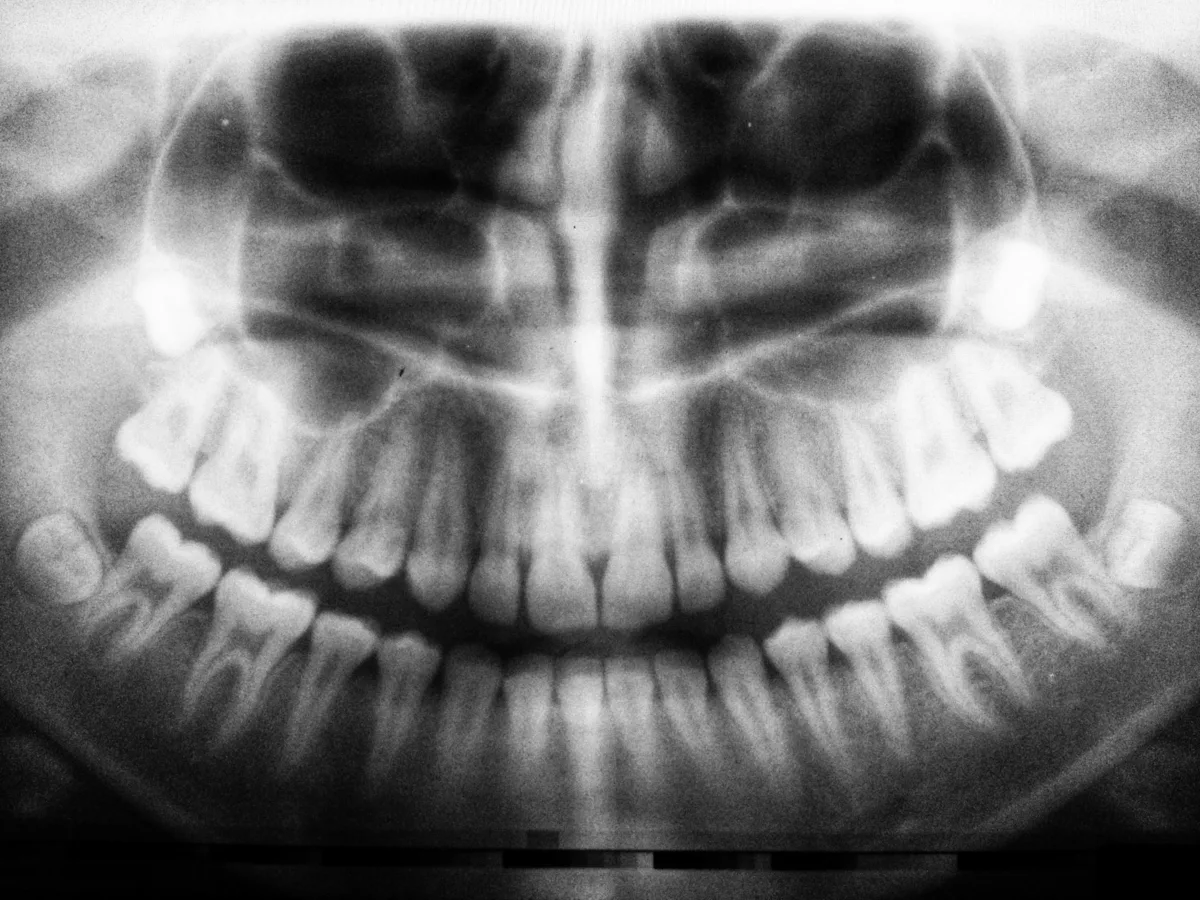
- X-rays, photos, periodontal charting or other records
- Any earlier letters or call notes
Get your dentist on board
This is usually what makes or breaks an appeal. Ask the office to write a short letter or narrative that names the tooth, describes what was found, explains why this treatment was needed, and says why the alternatives wouldn’t work. Many offices have done this before, and may even handle the appeal for you. Ask whether they charge for it.
Not sure how to ask? Send the office something like this:
Hi [office manager’s name],
My claim for [procedure] on tooth [number] was denied on [date] because “[reason from the denial].” I’m filing an appeal by [deadline]. Could Dr. [name] write a short letter covering the diagnosis, what the exam and X-rays showed, why this treatment was needed, why [cheaper option, if any] wouldn’t work, and the date of any earlier work on this tooth?
Please also send copies of the X-rays, photos and chart notes from [date]. Let me know if there’s a fee. Thank you!
[Name] | [Phone]
Request your file if the reason is unclear
If you’re in an employer plan, you can ask for the documents and criteria used to deny your claim. Doing this early gives you something specific to answer.
What Your Appeal Letter Should Include
- Header details: your name, member ID, group number, patient name if different, claim number, date of service, dentist’s name, and procedure codes from the EOB.
- A plain statement: “I’m appealing the denial of this claim.”
- The insurer’s reason, quoted from the letter.
- Your answer, using facts, plan language and the dentist’s findings.
- What you want: payment of the claim under your benefits, or reprocessing at the correct rate.
- A list of what’s attached.
- A reply request, in writing.
Leave out the part about being a loyal customer. An appeal reviewer is checking facts against plan terms, and your best writing won’t change that. Keep it to a page, and let the attachments carry the weight.
Worked Example
Say you’re Alana, and your plan denied a crown on tooth 30. (She’s invented, and so is her plan.) The EOB says “alternate benefit applied: amalgam filling.” The plan will pay $90 toward a filling rather than about half of the $1,350 crown.
Alana’s dentist writes two paragraphs: the tooth has a large old filling and a crack through a cusp, and there isn’t enough healthy structure left to hold another filling. X-rays and an intraoral photo are attached.
Alana’s letter quotes the denial reason, points to the dentist’s narrative and the photos, and asks the plan to review the claim under its crown benefit. It doesn’t argue dentistry herself. That’s a sensible division of labor. The patient states the request and the dentist supplies the evidence.
Template 1: General Appeal for a Denied Claim
[Your Full Name]
[Your Address]
[Phone] | [Email][Date]
[Dental Insurer]
Attn: Appeals Department
[Address from Denial Letter]Re: Appeal of claim denial
Member ID: [number] | Group: [number]
Patient: [name] | Claim #: [number]
Date of service: [date] | Provider: [dentist’s name]
Procedure code(s): [codes]To the Appeals Department:
I’m appealing the denial of the claim above. Your [letter / explanation of benefits] dated [date] states the claim was denied because “[quote the reason].”
I believe this decision should be reversed because [one or two specific reasons]. My dentist, Dr. [name], explains in the attached letter that [key clinical point]. [My plan booklet, page (number), states that (quote or summary).]
Please reprocess this claim and pay it according to my benefits. Please send your decision in writing. If you uphold the denial, please tell me the specific plan terms relied on and any further appeal options.
Enclosed: denial letter; dentist’s letter; X-rays and records; [other].
Sincerely,
[Signature]
[Printed Name]
Template 2: Alternate Benefit Applied (Downgrade)
Re: Appeal of alternate benefit determination, Claim #[number], Member ID [number]
To the Appeals Department:
You processed my claim for [procedure, code] on tooth [number] at the benefit level for [cheaper alternative], stating it was an acceptable alternative.
According to the attached letter from Dr. [name], [the cheaper option] isn’t appropriate for this tooth because [clinical reason, such as: the remaining tooth structure can’t support it]. The enclosed [X-rays / photos / charting] show this.
Please review this claim under the benefit for [procedure actually performed] and pay it accordingly. Please send your written decision to the address above.
Sincerely,
[Name]
Template 3: Frequency Limit Denial
Re: Appeal of frequency limitation denial, Claim #[number], Member ID [number]
To the Appeals Department:
You denied my claim for [procedure] on tooth [number], stating that the plan’s limit of one every [number] years applies. [Your records show a previous (procedure) on (date).]
[Option A: That date is incorrect. Records from Dr. (name) show the earlier work was done on (date), or on a different tooth.]
[Option B: I’m asking for an exception. The earlier (crown or restoration) failed because (reason, such as: new decay / a fracture from an accident on (date)), as explained in the attached letter.]
Please reprocess the claim, or tell me what plan provision you’re relying on if you uphold the denial.
Sincerely,
[Name]
Template 4: Second-Level Appeal or Follow-Up
Use this if the first appeal was denied and your plan offers another level, or if you haven’t heard back within the stated time.
Re: [Second-level appeal / Status of appeal], Claim #[number], Member ID [number]
To the Appeals Department:
On [date], I appealed the denial of the claim above. A copy is attached. [You denied that appeal on (date). / I haven’t received a decision, and the stated timeframe has passed.]
[For a second-level appeal: I’m requesting further review. Since my first appeal, I’ve obtained (new evidence: a second dentist’s opinion / new records), which shows (point).]
Please send me copies of the documents and criteria used in your decision, free of charge, along with your written decision and any further options I have, including external review if available.
Sincerely,
[Name]
Wording That Helps an Appeal
| Say this | Not this |
|---|---|
| “Your letter says the crown wasn’t necessary. Dr. Lee’s attached notes show a cracked cusp.” | “My dentist knows better than your reviewer.” |
| “Page 12 of my plan booklet covers crowns when a tooth can’t be restored with a filling.” | “I’ve paid premiums for years, so this should be covered.” |
| “Please send the criteria you used.” | “You’re just trying to avoid paying.” |
| “Please reprocess this claim under my crown benefit.” | “Fix this now.” |
Sending It and Tracking It

- Use the address in your denial letter. Appeals sent to the regular claims address can get lost.
- Keep proof. Certified mail, fax confirmation or a portal upload receipt all work. DentalPlans.com suggests certified mail or the online portal.
- Send copies, not your originals.
- Write down your deadline and your follow-up date.
- Call about two weeks later to confirm your appeal was received and logged. Note the name, date and any reference number.
If you haven’t heard back by the time the plan said it would respond, or after about 30 days if it said nothing, send Template 4 and call again. Ask your dentist’s office to hold off on sending your balance to collections while the appeal is pending. Most will listen if you ask early.
What If the Appeal Is Denied?
Read the decision carefully and find out whether you have another level of appeal. After that:
- Ask about external review. Some plans and states offer an independent review, though the rules written for major medical coverage don’t always reach standalone dental plans. Your denial letter or state insurance department can tell you what applies.
- Complain to your state insurance department. If your plan is insured, it can look at whether the company followed the rules. The NAIC keeps a directory of state departments.
- Get help with an employer plan. Your HR or benefits team may have contacts at the insurer. The U.S. Department of Labor’s EBSA benefits advisors can answer questions about private employer plans.
- Talk to your dentist about cost. They may offer a discount for paying upfront, a payment plan, or a different treatment option. A dental school clinic may be cheaper too.
- Talk to a lawyer if the amount is large. Employer plans have strict rules about going to court, and there can be deadlines, so don’t sit on it.
Frequently Asked Questions
Can my dentist appeal for me?
Often, yes. Many dental offices handle claim corrections and appeals, and the plan may ask you to sign a form naming them as your representative. Even so, keep your own copy of everything and track your own deadline.
Should I get a pre-treatment estimate next time?
For anything major, yes. An estimate isn’t a guarantee of payment, but it shows you how the plan is likely to treat the claim before you agree to the work, and it gives you a chance to send extra records early.
What if the plan paid, but less than I expected?
That’s often due to the plan’s allowed amount, an alternate benefit or an out-of-network rate. Read the EOB line by line. You can appeal an amount, not just a flat denial, if you think it was calculated wrong.
How long does a dental appeal take?
Check your denial letter first. DentalPlans.com says insurers typically respond in 30 to 60 days, and employer plans have set limits. A simple paperwork fix through your dentist’s office can move faster.
Do I have to pay the bill while I appeal?
Your agreement with the dentist usually still stands, so talk to the office. Many will wait for the outcome or set up a small payment arrangement if they know an appeal is underway.
Is a dental appeal different from a medical insurance appeal?
The basic steps are similar. For more on general appeals, see our guide to writing an insurance claim appeal letter.
Related Guides
- How to Write an Insurance Claim Appeal Letter (With Free Templates)
- Letter to a Creditor Asking for a Payment Plan
Sources
We checked this guide against the following sources:
- Legal Information Institute: 29 CFR 2560.503-1, claims procedure
- Brookhaven National Laboratory: Delta Dental claim appeal document
- DentalPlans.com: How to fight or appeal a denied dental claim
- DrBicuspid: 10 reasons why dental claims are denied
- NAIC: State insurance departments
Last reviewed: November 5, 2026 by the PerfectWordNow Editorial Team.
Disclaimer: This article is for general information only and is not legal, insurance or dental advice. Plan terms and state rules vary. For advice about your situation, talk to your plan, your dentist, your state insurance department or a licensed attorney.